Armenian Genocide Memorial
Hilltop memorial and museum to the victims of 1915
- Area Yerevan
- Type Memorial
- Time needed 1h 30m
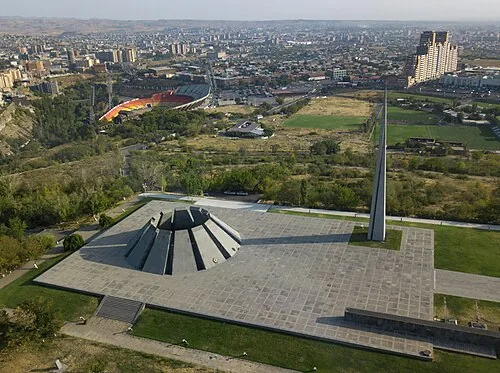
Tsitsernakaberd is the Armenian Genocide memorial and museum, on a hill above the Hrazdan gorge in Yerevan. It commemorates the roughly 1.5 million Armenians killed in the Ottoman Empire from 1915, and it is the site of the national commemoration every 24 April.
Open in the planner →Getting there
Fifteen minutes from the city centre by taxi, or a walk up from the Kiev Bridge. There is parking at the top and a path through the memorial park.
What you see
Three elements. A 44-metre stele split in two, for the division of the Armenian people. A circle of twelve inward-leaning slabs around an eternal flame, sunk below ground level so that visitors look down into it. And the museum, built into the hillside, which sets out the history with documents, photographs and survivor testimony. The approach is a long wall inscribed with the names of the places the dead came from.
What to pair it with
It sits apart from the rest of a Yerevan day and is better not rushed. If you are pairing anything, the Cascade and the Matenadaran are on the same side of the centre.
When to go
Any morning. The museum is closed on Mondays. On 24 April the site is given over to the commemoration and hundreds of thousands of people walk up with flowers; visiting that day means joining that, not touring.
What is hard about it
The museum is harrowing, and deliberately so. Allow for the fact that you may not want to do anything else afterwards. There is little shade on the approach in summer.
Common questions
Is there an entrance fee at Tsitsernakaberd?
[VERIFY — the museum has historically been free to enter; confirm before publishing]
How long do you need at Tsitsernakaberd?
Around 75 minutes, most of it in the museum.
What does Tsitsernakaberd mean?
'Fortress of swallows', the name of the hill the memorial stands on.
Nearby
- Yerevan CascadeGiant limestone stairway with modern sculpture and city views
- MatenadaranRepository of ancient Armenian manuscripts
- Republic SquareYerevan's central square with musical fountains
- Erebuni FortressUrartian citadel from 782 BC, the birthplace of Yerevan
- History Museum of ArmeniaNational collection from prehistory to the modern era
- National Gallery of ArmeniaThe country's largest art collection, on Republic Square
More of the same kind
- Mother ArmeniaMonumental statue in Victory Park above the city
- Komitas PantheonResting place of Armenia's great artists and writers
- Sardarapat MemorialBattle memorial and ethnography museum